

For over a decade, I have been deeply involved in international sales and marketing, specializing in scaling e-commerce businesses through omnichannel marketing. One recurring phrase that resonates throughout the industry is “Content is King.” However, leveraging similar content across diverse marketing channels can be challenging and may even conflict with your branding. In this blog post, I will share my successful recipe for crafting an effective content marketing strategy and recommend various software tools to enhance your efforts.
What is Content Marketing? A Clear Definition
Content marketing is a strategic approach focused on creating and distributing valuable, relevant, and consistent content to attract and retain a defined audience, ultimately driving profitable customer actions. It involves providing content that solves problems or offers insights, tailored to the audience’s interests and needs, and consistently produced to build trust and loyalty. The primary goals of content marketing are to attract attention, build brand awareness, engage the audience, and drive conversions.
Branding in Content Marketing
Branding in content marketing involves creating and promoting content that not only engages your audience but also reinforces your brand’s identity, values, and message. Effective branding in content marketing ensures that every piece of content reflects your brand’s voice and aesthetic, helping to build a strong, recognizable presence across all channels.

Understanding Content Marketing Strategy
A content marketing strategy is a comprehensive plan that outlines how to create, manage, and distribute content to attract and engage your target audience. The goal is to drive profitable customer actions by providing valuable and relevant content that addresses the needs and interests of your audience. A well-crafted content marketing strategy helps build brand awareness, foster customer loyalty, and ultimately increase sales.
Key Elements of a Content Marketing Strategy
- Audience Research
- Understanding your target audience is crucial. Conduct thorough research to identify their needs, preferences, and pain points. Use tools like Google Analytics, social media insights, and customer surveys to gather valuable data.
- Setting Goals
- Define clear, measurable goals for your content marketing efforts. These could include increasing website traffic, generating leads, boosting social media engagement, or improving conversion rates.
- Content Planning and Creation
- Develop a content calendar that outlines the types of content you will create, the topics you will cover, and the channels you will use for distribution. Ensure your content is diverse, including blog posts, videos, infographics, podcasts, and social media updates.
- Content Distribution
- Identify the most effective channels for reaching your audience. This could include your website, social media platforms, email newsletters, and third-party publications. Tailor your content to suit each channel’s unique characteristics.
- SEO: Search Engine Optimization
- Optimize your content for search engines to improve visibility and drive organic traffic. Use keyword research tools like Ahrefs, SEMrush, and Moz to identify relevant keywords and incorporate them naturally into your content.
- Engagement and Interaction
- Encourage audience interaction by asking questions, responding to comments, and fostering a sense of community. Use social media management tools like Hootsuite and Buffer to monitor and engage with your audience effectively.
- Performance Analysis
- Regularly analyze your content marketing efforts to measure success and identify areas for improvement. Use analytics tools like Google Analytics, HubSpot, and Sprout Social to track key metrics and adjust your strategy accordingly.
My Recipe for a Successful Content Marketing Strategy

- Consistency is Key
- Consistency in content creation and distribution is vital. Establish a regular posting schedule and stick to it. This helps build trust and keeps your audience engaged.
- Quality Over Quantity
- Focus on creating high-quality content that provides real value to your audience. It’s better to produce fewer pieces of exceptional content than to churn out mediocre content frequently.
- Leverage User-Generated Content
- Encourage your customers to create and share content related to your brand. User-generated content can be a powerful tool for building authenticity and trust.
- Repurpose Content
- Maximize the value of your content by repurposing it for different channels. For example, transform a blog post into a video, an infographic, or a podcast episode.
- Collaborate with Influencers
- Partner with industry influencers to expand your reach and credibility. Influencers can help you tap into new audiences and enhance your brand’s visibility.
- Utilize the Right Tools
- Invest in reliable content marketing tools to streamline your efforts. Some of my favorites include:
- Notion: For content planning and collaboration.
- Canva: For creating visually appealing graphics and presentations.
- Grammarly: For ensuring your content is free of grammatical errors.
- CoSchedule: For managing your editorial calendar and social media posts.
- BuzzSumo: For discovering popular content and trending topics.
- Invest in reliable content marketing tools to streamline your efforts. Some of my favorites include:
Best Content Marketing Software
| Software | Key Features | Best For | Pricing |
|---|---|---|---|
| HubSpot | All-in-one marketing platform, analytics, automation | Comprehensive marketing | Starts at $50/month |
| Buffer | Social media scheduling, analytics, engagement tools | Social media management | Starts at $5/month |
| Canva | Easy-to-use design tools, templates, collaboration | Creating visual content | Free, Pro starts at $12.95/month |
| Notion | Task management, note-taking, collaboration, databases | Content planning and organization | Free, Team plan starts at $8/user/month |
| Grammarly | Grammar and spell check, style suggestions | Ensuring content quality | Free, Premium starts at $12/month |
| BuzzSumo | Content discovery, influencer identification, analytics | Finding trending content | Starts at $99/month |
| CoSchedule | Marketing calendar, project management, analytics | Editorial calendar management | Starts at $29/month |
| SEMrush | SEO tools, keyword research, content optimization | Improving search engine ranking | Starts at $119.95/month |
| Hootsuite | Social media management, analytics, scheduling | Social media campaigns | Free, Pro starts at $19/month |
| Ahrefs | SEO tools, backlink analysis, content research | SEO and content marketing | Starts at $99/month |
This table includes a selection of the best content marketing software, highlighting their key features, ideal use cases, and pricing to help you choose the right tools for your strategy.
The Importance of a Project Management Tool in Content Marketing

Effective content marketing requires meticulous planning, organization, and execution. A project management tool is essential in this process, enabling you to streamline workflows, manage tasks, and ensure timely delivery of content across various channels. With a reliable project management tool, you can easily track progress, collaborate with your team, and maintain consistency in your content strategy.
Utilizing Project Management Tools
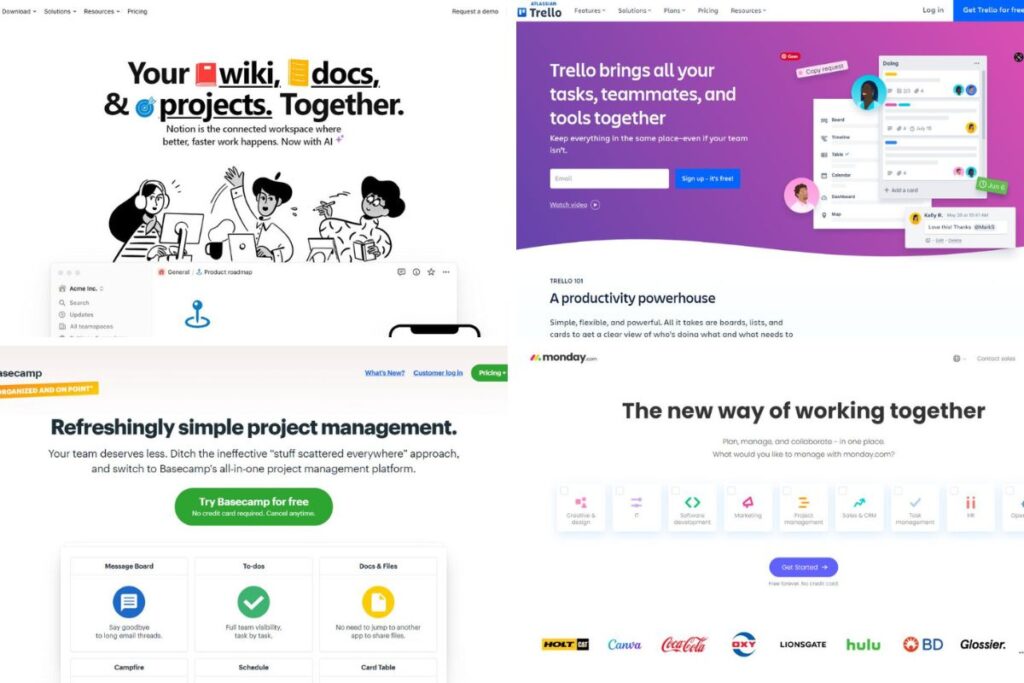
Over the years, I have built the ultimate content marketing framework in Notion. This powerful tool has evolved into a comprehensive omnichannel planner that simplifies the complexities of content marketing. Here’s how to make the most of a project management tool like Notion:
- Organize Your Content Calendar: Use Notion to create a content calendar that outlines all your planned content. This helps in visualizing your publishing schedule and ensuring consistency.
- Task Management: Assign tasks to team members, set deadlines, and track progress. Notion’s task management features ensure everyone stays on the same page and knows their responsibilities.
- Content Repository: Maintain a centralized repository of all your content assets. Notion allows you to store drafts, final versions, and multimedia files in an organized manner.
- Collaboration: Facilitate seamless collaboration with your team. Notion’s real-time editing and commenting features make it easy to work together on content pieces and provide feedback.
- Analytics and Reporting: Track the performance of your content with integrated analytics. Use these insights to refine your strategy and improve future content.
By leveraging Notion’s capabilities, you can develop a robust content marketing strategy that ensures effective execution and optimal results. My ultimate content marketing framework in Notion is a testament to the power of a well-structured project management tool in achieving marketing success.
Create a successful content marketing strategy
Creating a successful content marketing strategy requires careful planning, consistent execution, and continuous optimization. By understanding your audience, setting clear goals, and leveraging the right tools, you can develop a strategy that drives engagement and boosts your brand’s growth. Remember, content is indeed king, but the key to success lies in how you wield it.
Stay tuned for more tips and insights on scaling your e-commerce business through effective marketing strategies.
Let’s Connect!
Are you ready to scale your eCommerce business or enhance your digital marketing efforts? With over a decade of experience, I specialize in:
- Branding
- SEO Consulting
- Google Ads Management
- Email Marketing
- Paid Social
- Omnichannel Strategies
Book a 30-Minute Video Call: Let’s discuss your goals and how I can help you achieve remarkable growth.