
SEO · Search engine optimization
SEO that shows up
on the bottom line
Search engine optimization is about being found by the right people, on Google and in the AI answers, without paying per click. I treat it as an investment in visibility, measured on revenue rather than rankings.
- Experience
- 10+ years
- Focus
- Bottom line
- Go-to tool
- Ahrefs

What is SEO?
SEO stands for search engine optimization. It is the work of making a website easy enough to understand and trustworthy enough that the search engines show it at the top when someone searches for what you sell. That traffic is free in the sense that you do not pay per click, and that is why SEO is one of the most durable investments in digital marketing.
I always break SEO into three pillars, and a site needs all three in order:
- Technical. Can Google even find, understand and load your pages fast enough?
- Content. Do your pages answer precisely what people are actually searching for?
- Authority. Do other places on the web point to you as a source worth trusting?
The key concepts along the way: organic traffic is the visits you get without paying for ads. SERP is the results page you land on after a search. Keywords are the words people search with. Title tag and meta description are the headline and text shown in the search result. Backlinks are links from other sites to yours. And E-E-A-T is Google's way of assessing experience, expertise, authority and trustworthiness. The rest of this page explains how I work with all of it in practice.
SEO as a discipline has changed
SEO is not the same discipline today as it was ten years ago. Back then you could get far with plenty of links and keyword-stuffed pages. Then came a series of Google updates that rewarded genuine content and penalized tricks. The direction has been the same ever since. Away from outsmarting the search engine, toward being the most helpful and trustworthy source on your subject.
The new layer is that answers are increasingly read aloud by an AI assistant instead of being clicked on. It sounds like a break, but the foundation is the same as it has always been. Understand the person behind the search, and be the best answer.
I have worked deeply with the discipline for over ten years and today run the webshops Maxis.dk and Billigtraening.dk myself. Owning a real bottom line every month shapes the way I approach SEO. Rankings are not the goal in themselves, they are the means to the revenue they can turn into.
Technical SEO: the foundation under everything
Technical SEO is dull to most people and loved by me. It is the foundation, and if it is not in order, all the other work is wasted. Google needs to be able to crawl your pages, understand their structure and load them fast, even on a phone on a mediocre network.
What I look at first:
- Crawlability and indexing. Can the pages be found, and do they actually end up in Google's index? Here Search Console and a full crawl in Screaming Frog are my first two stops.
- Core Web Vitals and speed. Google measures how fast and stable the page loads. Lighthouse in Chrome gives me the numbers in black and white.
- Structure and internal navigation. A logical build makes it easy for both robots and people to find their way around.
- Schema markup. Structured data that tells the search engine exactly what a page is about. It is also the key to being shown correctly in AI answers.
On WordPress I handle the on-page technical work with Yoast or Rank Math configured properly, not just installed. On Shopify I work directly in the theme. And this page, the one you are reading right now, is built in Astro precisely to be as light and fast as technically possible. Practicing what I preach.
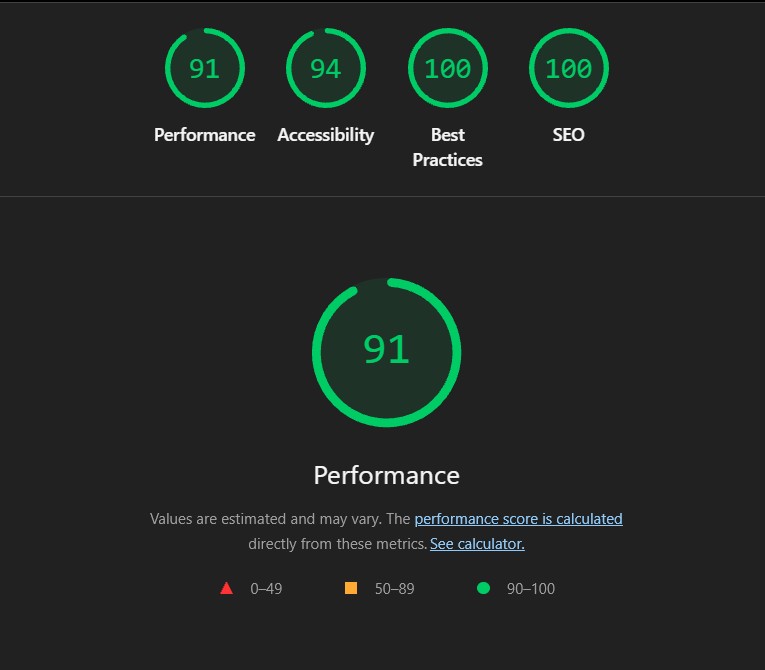
Numbers change over time. Test your own site on PageSpeed Insights.
Content and keywords: what moves rankings
Once the technical side is in place, the rest is about answering the right thing. Keyword research is where I find out what your customers are actually searching for and how large the demand is. Ahrefs is my preferred tool for it, with Semrush and Search Console as strong second sources.
But keywords are only half of it. What matters is search intent: what does the person behind the search actually want to achieve? Do they want to buy, compare or simply understand? A page that hits the intent precisely always beats a page that just repeats the keyword many times.
Title tags and meta descriptions are the first thing a searcher sees. They need to be sharp, honest and worth clicking. Here AI has become a powerful tool. I use Claude to research and draft title tags and briefs at scale, but the human is always in control. A machine can write fast. Only someone who knows the business knows what is worth writing about.
Authority and links: the trust that decides the fight
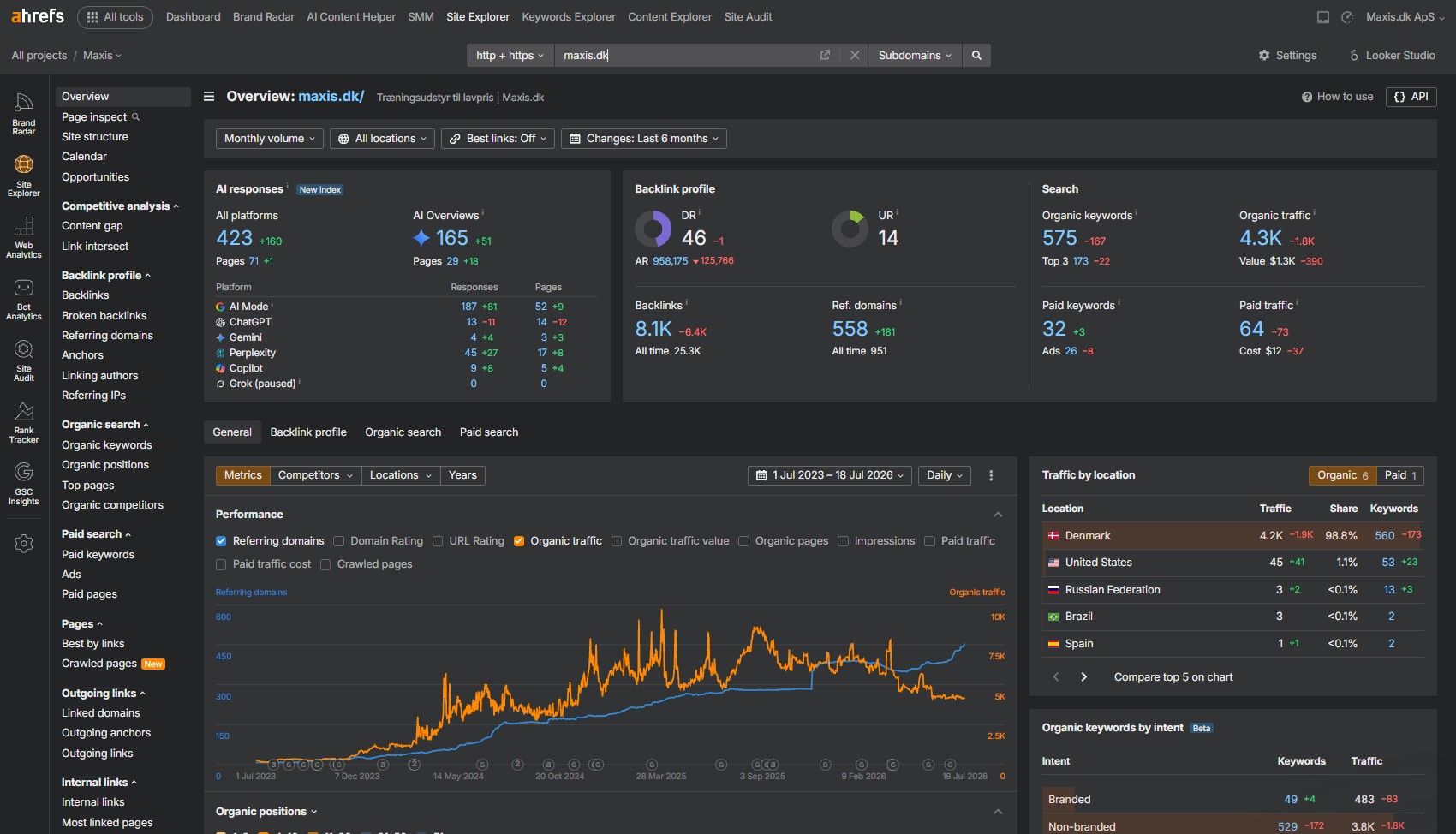
Two pages can have equally good technical work and equally good content. The one that wins is usually the one that the most other trustworthy sites link to. Backlinks are still one of the strongest ranking factors, because they act as recommendations. But it is quality over quantity. A single link from a relevant, respected media outlet is worth more than a hundred links from irrelevant pages.
Internal link building is the overlooked twin. By linking wisely between your own pages, you distribute authority to where it is needed, and you help both Google and the reader understand what belongs together. It is some of the cheapest and most effective SEO work there is, and most sites do far too little of it.
This is where it gets interesting, because SEO does not live in its own corner. The demand I uncover with keyword research makes your Google Ads cheaper, because we bid on the right things. The content I build gives your email marketing something to link to. And a strong brand lifts the click-through rate on everything you do. That is the omnichannel mindset I build all of my work on.
SEO in the AI era: from Google to ChatGPT
One of the biggest shifts in the discipline is happening right now. More and more people ask ChatGPT, Copilot, Gemini or Claude instead of googling, and those assistants answer by citing sources. Becoming that source is a discipline in itself. It is called GEO, Generative Engine Optimization.
The mechanism is worth understanding. The AI assistants pull their answers from many of the same pages that rank high in organic search, and they tend to cite sources that are well structured and appear trustworthy. A solid SEO foundation is therefore also the foundation for being mentioned in an AI answer.
The foundation is the classic SEO work of clear structure, trustworthy content and schema markup. A solid foundation makes a site easy for the AI assistants to cite, and the AI layer sits on top. You can read the full approach on the page about GEO.
My tech stack for SEO
Tools do not do the work, but the right ones make it faster and sharper. This is what I use, and what each tool is best at.
Results and cases
Theory is easy. What counts is whether the numbers move. Here are three examples of sites where I have led the SEO work, each with its own challenge.

VICOS
vicos.dk
Nationwide staffing and recruitment agency. From page 2 toward the top 3 on city searches.

Energize
energiz.dk
Underfloor heating systems in a competitive market, built around organic visibility as the core.

Maxis
maxis.dk
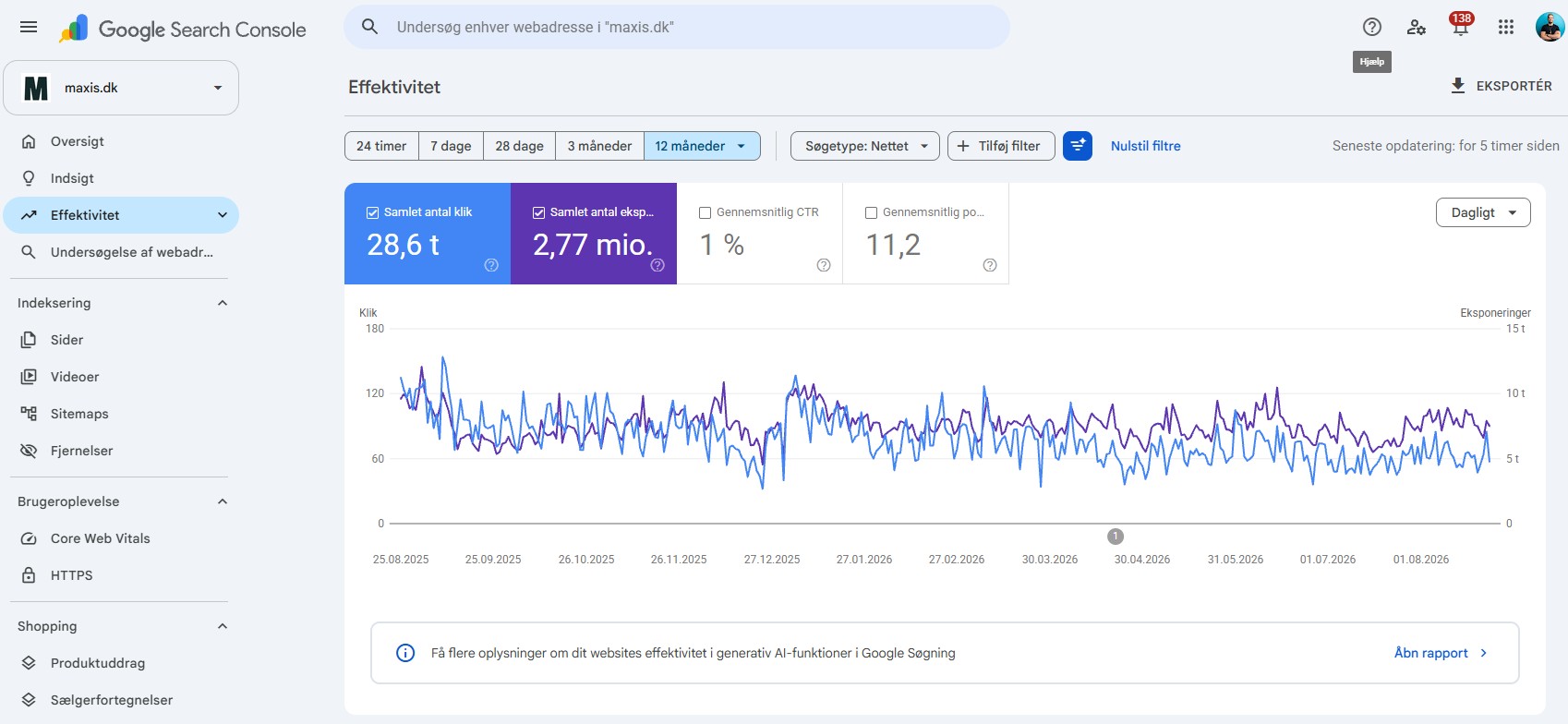
As CEO of the webshop behind the sports brand Nordic Power. Technical SEO, structure and content across 160 categories, all driven by sales.
FAQ
SEO, in brief
What does SEO cost?
How long does SEO take before it works?
Who is the best at SEO?
Is SEO still relevant when people ask ChatGPT instead of googling?
Do you work with both WordPress and Shopify?
Can you help connect SEO with Google Ads and email?
Articles on the topic
Alle artiklerSEO
Google Search Console: how I read the numbers before touching a site
Search Console is Google's own data on your site. Here is how I set it up, read the Performance report, find the easy wins and catch indexing errors before they cost traffic.
SEO
Lighthouse and Core Web Vitals: what the numbers mean and what moves them
Lighthouse measures in the lab, Core Web Vitals measure real users. Here is the difference, the three thresholds, the errors I find most often, and what took my own site from 75 to 98.
SEO
Yoast or Rank Math: what an SEO plugin should do, and what it must not
Yoast and Rank Math solve the same job in WordPress. Here are the differences, what I switch off in both, the setup I use, and why the choice matters less than most people think.
Read more
The other playbooks
Profit Engineering
Metoden der binder disciplinerne sammen.
Google Ads
Ads that build a business, not just ROAS in a dashboard.


Paid Social
Meta and social advertising with creative and scaling you can measure.


Automation
Email, flows, and AI automation that drive repeat sales on autopilot.


Branding
A strong brand lowers the cost of every click and every email.


Omnichannel
SEO, ads, email, and branding coordinated so they reinforce each other.


Want your site at the top?
Book a free 30-minute meeting. We will look at where your biggest SEO gain is hiding right now.