
Freelance GEO consultant
Become the source
AI cites
Generative engine optimisation is about being present in the answer when people ask ChatGPT, Copilot or Gemini instead of searching. Calm, curious advice from one experienced person.
What GEO is about
GEO stands for generative engine optimisation. As a GEO consultant, I work with a question that is becoming important for a growing number of brands: when a person asks an AI instead of searching, whose knowledge is the answer built on, and who gets named as the source?
It follows a different logic from classic search. A results list gives ten blue links to choose between. An AI answer gives one summarised answer and perhaps names two or three sources along the way. The gap between being one of those sources and not being mentioned at all is wide, and it only grows as more people let a model do the research for them.
I approach this as a field that is still young. A great deal is not settled yet, and part of the work is to keep up, test and adjust rather than lean on finished recipes. That makes it both interesting and a little humbling to work with.
From search to answer
The past few years have moved some of the behaviour companies used to meet on Google into conversations with ChatGPT, Microsoft Copilot, Google AI Overviews and Gemini. People still ask the same questions. They increasingly just get them answered as a single response rather than a list they read through themselves.
For a brand, this means visibility is no longer only about ranking high. It is also about whether a model can find, understand and trust what you have written, and choose to build its answer on it. If you are cited, you are part of the decision even when the user never sees your homepage. If you are not, you are invisible at precisely the moment the choice is made.
How to become the cited source
There is no button you press. But there are things that consistently seem to make a brand more likely to be used as a source, and those are what I work from:
- Clear answers to real questions. Content that answers what people actually ask, in language a model can summarise without guessing.
- Structure a machine can read. Sound architecture, clear headings and relevant markup, so it is easy to lift out the right point.
- Credibility and a professional identity. A clear author, concrete figures and references rather than loose claims. Models appear to favour sources that seem to know what they are talking about.
- Technical health. A site that is accessible and fast, so the content can be indexed and retrieved in the first place.
- Consistency over time. A brand that appears coherently across its own pages and credible external sources is easier to trust.
Much of this overlaps with good old SEO, and that is no accident. The full approach and the methods I use are gathered on my page about generative engine optimisation.
The approach in practice
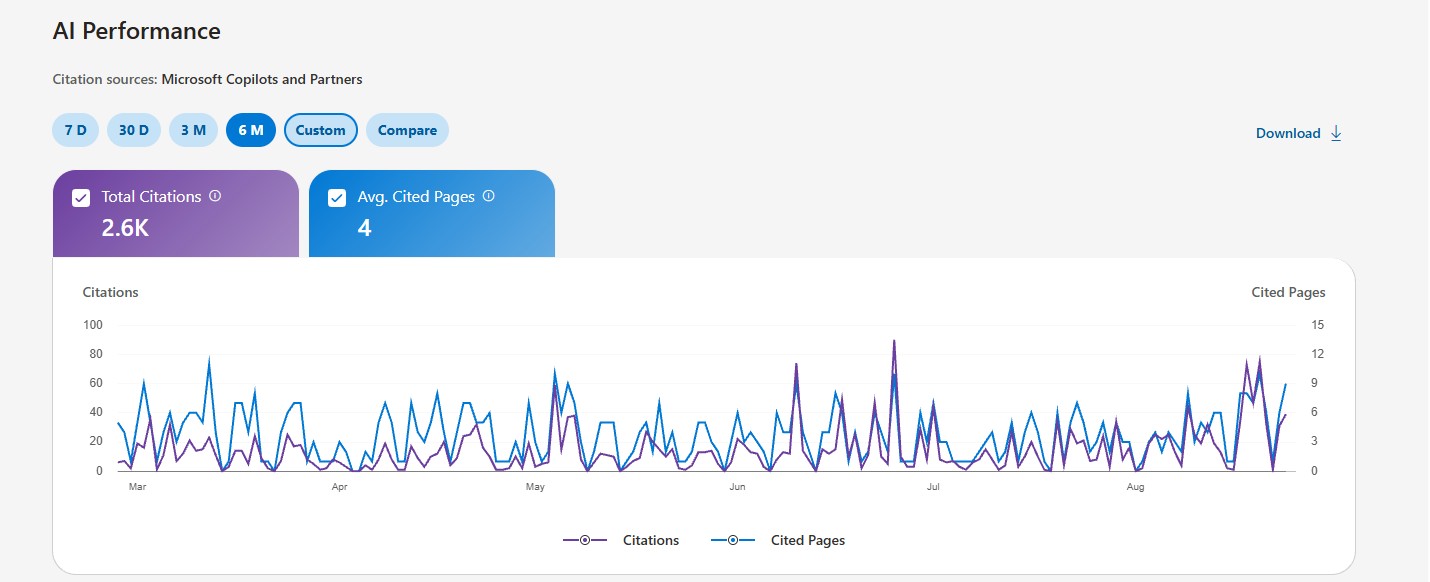
I work on structure, content and technique with the aim of making a company easier to find and cite. A solid SEO foundation makes a site easy for the AI assistants to read, so the brand becomes a source they can draw on.
Every brand starts somewhere different, and results depend on the starting point, the market and the effort. But working systematically at being present in AI answers can move something. There are more examples under cases.
One person, not an agency
The advice is delivered through Profit Studio, but in practice it is me. You plan with me, talk to me and get the work from me. There is no junior who takes over after the pitch, and no layers of project management to talk through.
That means a short path from decision to action and an adviser who knows your business in depth. In return, my time is limited, which is why I say no to work where I do not believe I can make a real difference. That is more honest for both of us.
GEO sits under SEO
It is tempting to treat GEO as something entirely new, but it builds on what already works. A site that is well structured, technically sound and written to answer real questions is both easier for Google to rank and for a language model to cite. So it rarely makes sense to approach generative engine optimisation in isolation.
I see it as one layer in a larger whole, alongside search, paid traffic, email and data. The combined approach, where channels are judged against the bottom line rather than against vanity numbers, is what I call Profit Engineering. GEO is a natural part of that picture, not a free-standing discipline.
Experience and background
I am CEO of Danish webshops, and I advise from practice rather than theory, because I sit with a bottom line myself every day. Over more than ten years I have worked with digital marketing across more than twenty brands.
I have spoken at eTail Nordic and Savant eCommerce on how generative AI can be used for content, tracking and profitability, and I have taught as a guest lecturer at Copenhagen Business School. It is a field I follow closely and work with in practice, and I am glad to share what I learn along the way.
FAQ
GEO consultant, in brief
What is a GEO consultant?
Can you guarantee that ChatGPT will cite my brand?
Is GEO the same as SEO?
What does it cost?
Do you only work with Danish brands?
Curious how your brand shows up in AI answers?
Book a no-obligation 30-minute meeting and we will look honestly at where you stand today and where there is most to gain.